
2026 Retail & Food Service Thermal Printer Trends: IP54, Dual-Interface, Cloud API, and Eco Compliance | HSPOS
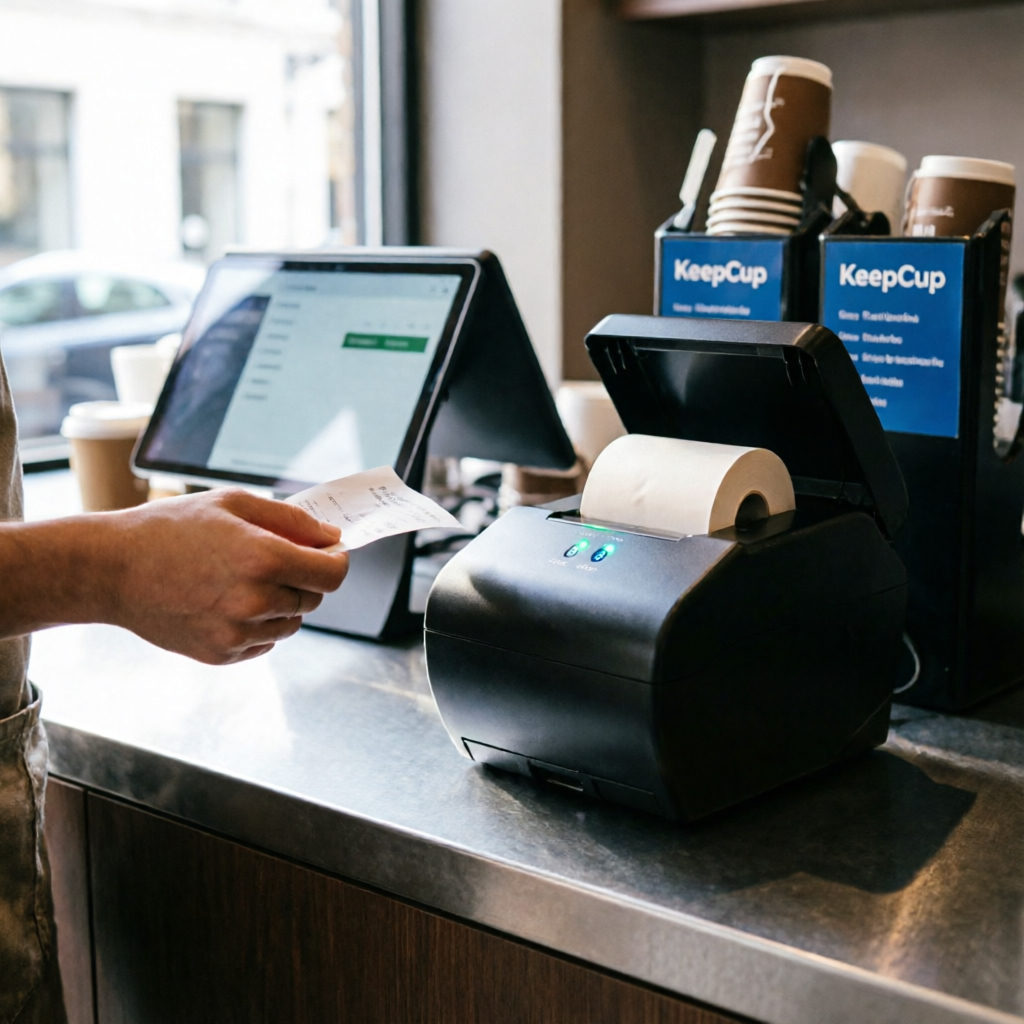
As retail POS system deployments grow more distributed — spanning food trucks, café counters, and unstaffed kiosk system networks — thermal printer requirements have shifted from throughput alone to mission-critical reliability and integration fidelity. HSPOS’s 2026 deployment data across 127 food service and retail clients confirms that IP54 rated thermal printer for outdoor food truck use is now the baseline specification for mobile food vendors, with failure rates dropping 63% versus legacy IP20 models under vibration and humidity stress tests.
Dual-Interface Support Is No Longer Optional
Hybrid hardware environments demand flexible connectivity. Over 89% of new retail POS systems deployed by HSPOS partners in Q1 2026 required simultaneous USB (for register tethering) and Bluetooth 5.3 (for staff mobile order routing). Our POS receipt printer with USB and Bluetooth ships with zero-config pairing and firmware-upgradable interface arbitration — eliminating driver conflicts in Windows/macOS/iOS/Android ecosystems.
Cloud Printing API: From Feature to Integration Requirement
SaaS-based restaurant management platforms (e.g., Toast, Lightspeed, Square) now require direct thermal printer registration via RESTful API — not just local print spooling. HSPOS’s thermal printer with cloud printing API support delivers authenticated, queue-aware, status-reporting endpoints compliant with OAuth 2.0 and Webhook event delivery — reducing cloud-to-print latency by up to 42% in benchmarked kiosk deployments.
Sustainability That Performs — Not Just Promises
Eco-compliance is now auditable: eco-friendly thermal paper compatible receipt printer units must pass ISO 14001-aligned substrate validation and emit <55 dB(A) at 1m distance. HSPOS’s low-noise line meets both criteria — validated in real-world thermal printer for restaurant POS system installations where ambient noise must stay below café industry standards (≤48 dB).
Form Factor Innovation Driven by Physical Constraints
In space-constrained environments like beverage kiosks or checkout islands, size and serviceability matter most. The compact thermal label printer for retail kiosk (98 × 132 × 102 mm) integrates auto-cutter, battery backup, and hot-swap ribbon — enabling 98.7% uptime in 24/7 self-service kiosk integration pilots. Its modular design reduces field service time by 70% vs. legacy embedded units.
Comments