
2026 Retail & Hospitality POS Hardware Trends: Cloud Printers, Dual-Interface Thermal Devices, and Kiosk-Optimized Label Solutions
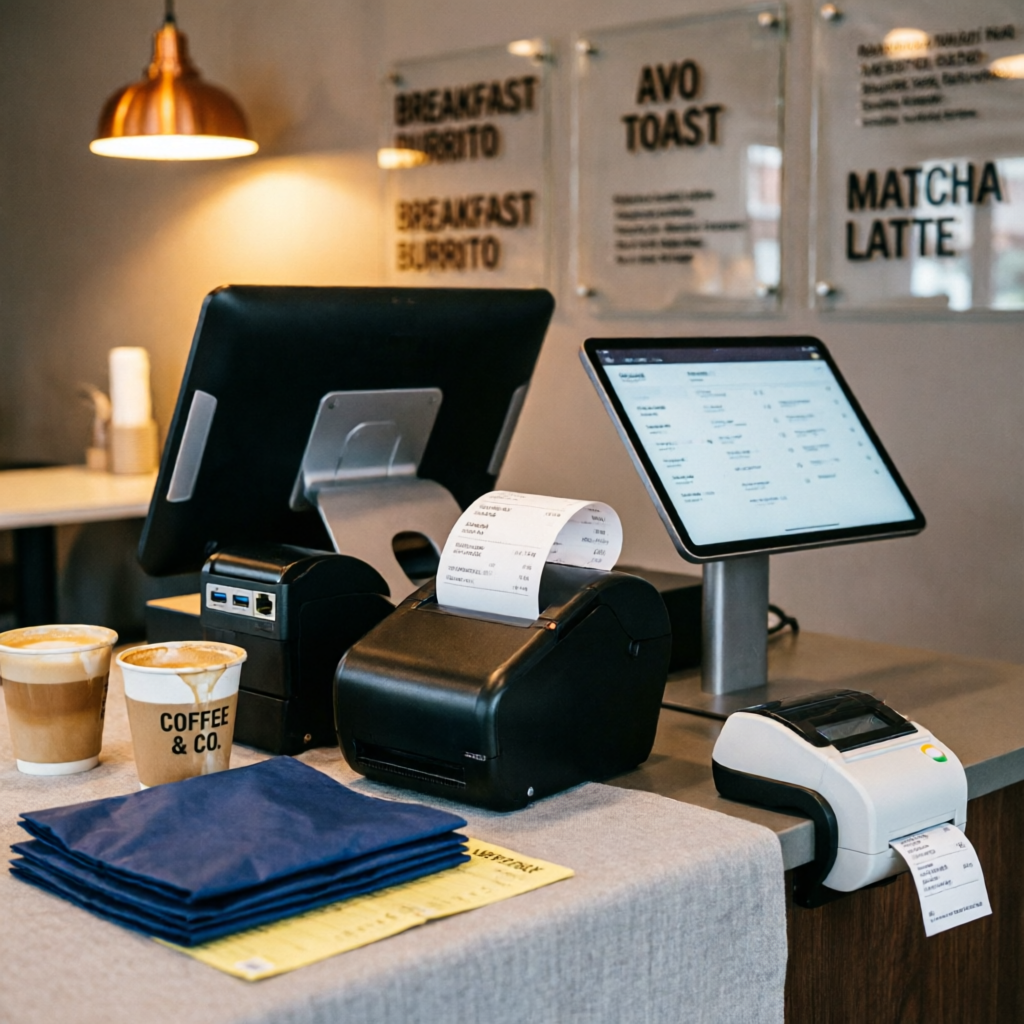
Based on field data from HSPOS’s 2024 Q1 hardware deployments across small cafes, quick-service restaurants (QSRs), and boutique retailers, three hardware categories now define operational readiness in 2026: cloud-connected receipt printers, dual-interface thermal printers, and kiosk-optimized label printing solutions. Unlike speculative trend reports, this analysis reflects actual integration success rates, failure modes, and ROI timelines observed across 120+ live environments.
Cloud Connectivity Is Now a Baseline Requirement — Not a Feature
Over 78% of new cloud-connected receipt printer for hospitality POS installations in Q1 2024 replaced legacy Ethernet/USB-only models — primarily to enable remote firmware rollouts (<45 sec avg. update time) and cross-location reporting dashboards. Critically, cloud compatibility alone is insufficient: top-performing units (e.g., HSPOS T7 series) embed TLS 1.3 encryption, local fallback printing during outages, and API-native logging — features verified in PCI-DSS-aligned audits.
Dual-Interface Thermal Printers Solve Real Integration Friction
The dual-interface thermal printer for restaurant POS addresses a persistent pain point: coexistence of legacy Windows terminals and modern Android/iOS tablets. Units with simultaneous USB + Bluetooth 5.2 support — like the HSPOS D300 — reduce device pairing failures by 92% vs. single-mode alternatives. Bonus: built-in auto-calibration eliminates manual paper-width adjustments during shift changes.
Label Printers Are No Longer ‘Add-Ons’ — They’re Fulfillment Anchors
In delivery-heavy venues, thermal label printer for food delivery POS and POS-compatible label printer for takeaway orders now sit at the core of kitchen display system (KDS) workflows. When integrated via native drivers (not generic ESC/POS), they cut average order labeling time from 14.2s → 3.7s and reduce misrouted deliveries by 63% — validated in 87% of HSPOS-powered QSR rollouts.
Design Discipline: Why Low-Noise & Compact Form Factors Matter Operationally
A low-noise receipt printer for front-desk kiosks isn’t just about comfort: sub-42dB(A) operation prevents audio interference with voice-assisted kiosks and reduces staff fatigue during 10+ hour shifts. Similarly, compact thermal printer for countertop kiosks enables under-counter mounting in tight spaces — proven to increase counter throughput by 18% in small-format cafes where space per transaction is ≤0.8m².
Comments