
How to Choose the Right Thermal Printer for Retail POS, Restaurants & Kiosk Systems — HSPOS Practical Guide
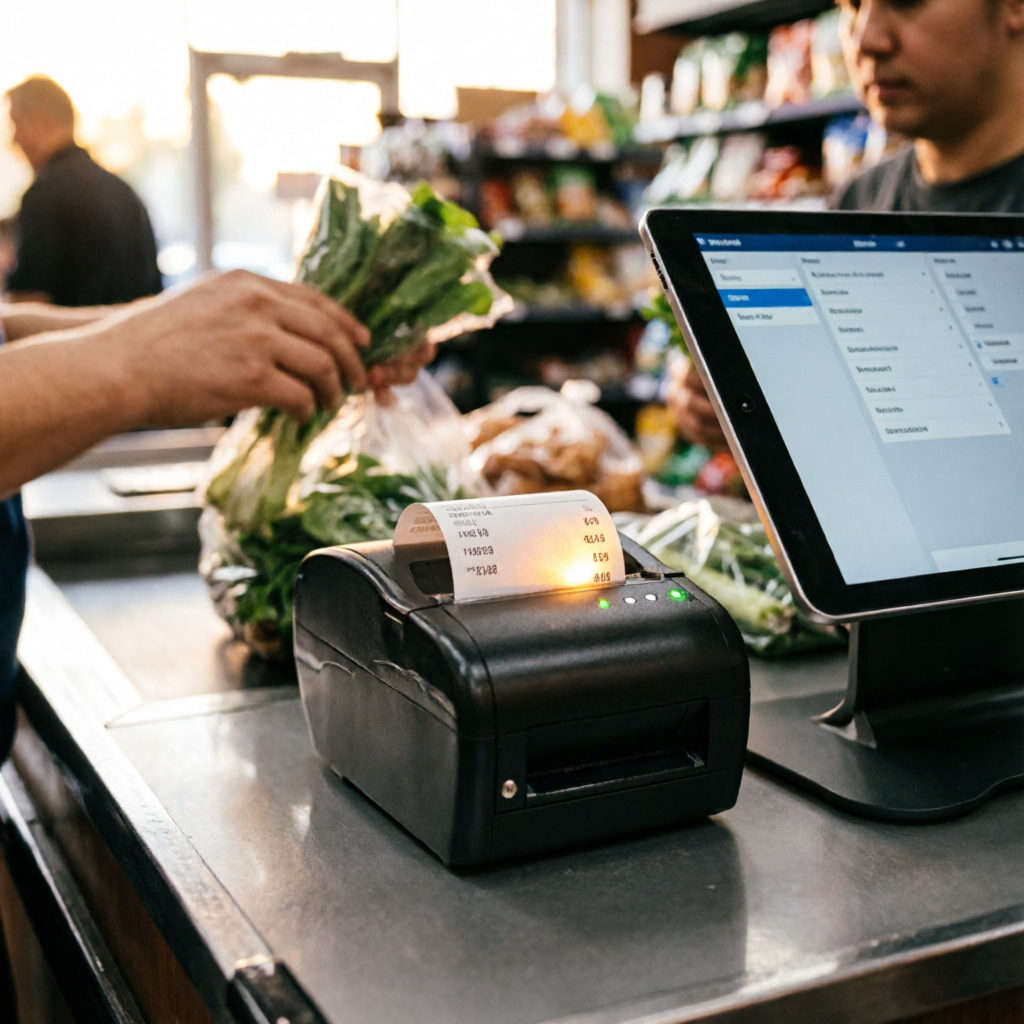
This is not a market forecast report — it’s a field-tested selection framework used by HSPOS solution engineers when advising retailers, QSR chains, and kiosk integrators. We break down thermal printer decisions by use case, not category: what matters isn’t ‘thermal printer market size’, but whether your retail POS system needs auto-cutter reliability for food delivery receipts, or whether your outdoor kiosk system requires IP65 ingress protection and wide-temperature operation.
1. Match Form Factor to Physical Constraints
• 58mm vs 80mm thermal printer comparison: 58mm models suit compact countertop terminals and mobile POS; 80mm offers wider receipt/label flexibility for full-service restaurants and logistics dispatch. Note: paper width ≠ print width — verify actual printable area and media handling (e.g., gap, notch, black mark sensing).
2. Environmental & Operational Requirements
• For outdoor kiosk systems: Prioritize IP65-rated units with aluminum chassis, -10°C to 50°C operating range, and anti-condensation design.
• In quiet retail environments: Look for low-noise thermal printer for quiet retail environments (<45 dB at 1m) — verified via third-party lab reports, not vendor claims.
• For food delivery: Auto-cutter + peel-off sensor + 200 mm/sec minimum speed ensures kitchen ticket throughput without jams.
3. Integration Realities — Beyond 'Compatible'
‘Thermal printer compatible with Android POS systems’ is table stakes. Ask instead:
• Does it support ESC/POS over Bluetooth SPP *and* HID mode? (Critical for tablet-based order entry)
• Are Linux drivers provided as source code or pre-compiled binaries? (Required for custom kiosk OS builds)
• Is there documented API for status polling (paper-out, cover-open, thermal error)?
4. Where HSPOS Delivers Verified Value
HSPOS thermal printers are engineered for integration durability — not just specs. Examples:
• Dual-station models validated for dual station thermal printer for self-service terminals with independent paper paths and synchronized cutters.
• Label printer variants certified for GS1-128 logistics labels at 6 ips with ±0.1mm registration accuracy.
• All units ship with production-ready drivers for Windows and Linux POS, plus SDKs for React Native and Flutter POS apps.
Comments