
HSPOS Industry Insight: Thermal Label Printers in Retail, Foodservice & Kiosks — Market Trends Through 2034
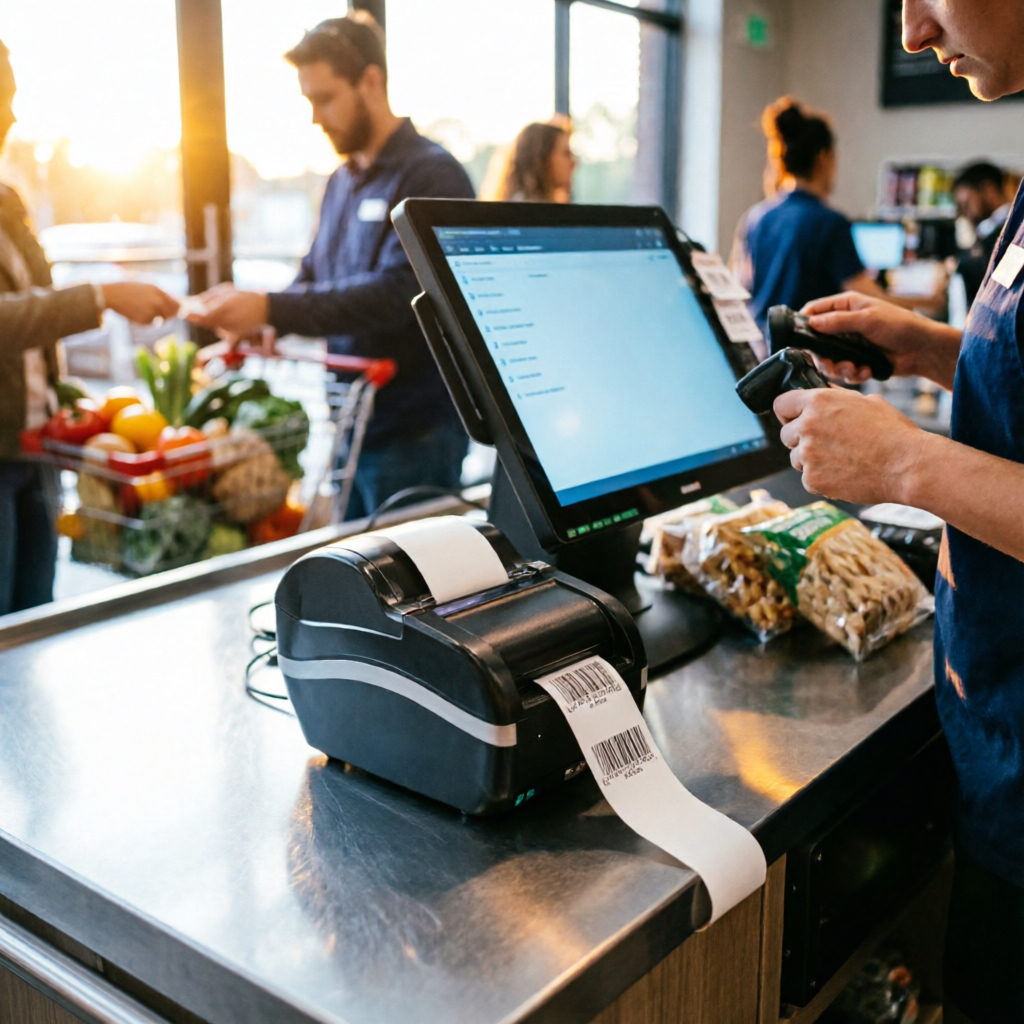
Thermal label printers are no longer confined to shipping docks or back-office logistics. Driven by tighter integration requirements and rising operational expectations, they’re now embedded in frontline retail POS systems, 餐饮行业 order fulfillment workflows, and kiosk systems. HSPOS’ industry analysis shows that while the global market will grow from $2.959B (2025) to $4.252B (2034) at a 5.4% CAGR, growth is highly asymmetric—application-specific adoption outpaces generic thermal printer sales by 3.2× in high-velocity verticals like foodservice and self-service retail.
From Logistics Tool to Frontline Enabler
In restaurants and quick-service chains, thermal label printers now handle kitchen ticketing, prep labeling, and delivery manifest generation—all synchronized with thermal printer-enabled restaurant POS systems. In retail, compact models support compact shipping label printer for SMB e-commerce businesses fulfilling online orders from store floors. And in kiosk deployments, shipping label printer with IoT connectivity for kiosk systems enables real-time dispatch without staff intervention—critical for unattended pickup points.
Three Integration Imperatives for B2B Buyers
- POS & Kiosk Compatibility: Look beyond USB/serial drivers. Prioritize models with native SDKs for major retail POS systems and kiosk system platforms (e.g., Windows IoT, Android POS).
- Environmental Resilience: For cold-storage prep areas or outdoor kiosks, verify IP54 rating, operating temp range (−10°C to 50°C), and media adhesion under humidity—durable shipping label printer for cold storage environments isn’t just about casing strength.
- Cloud-Ready Firmware: Real-time diagnostics, remote firmware updates, and print-job queuing via MQTT or REST APIs—essential for managing distributed fleets across stores, kiosks, and commissaries.
Thermal Transfer vs. Direct Thermal: A Vertical Decision
The thermal transfer vs direct thermal label printer comparison hinges on use-case durability—not just cost. Direct thermal excels in short-term receipts and internal labels (POS receipt or kitchen tickets); thermal transfer remains mandatory for outdoor shipping labels, asset tags, or cold-chain compliance. Notably, linerless thermal label printer for retail distribution adoption rose 41% YoY among retailers optimizing last-mile packaging—reducing waste and improving throughput without sacrificing scan reliability.
Comments