
HSPOS Industry Insight: Thermal Printer Trends Shaping Retail, Café & Logistics in 2025–2033
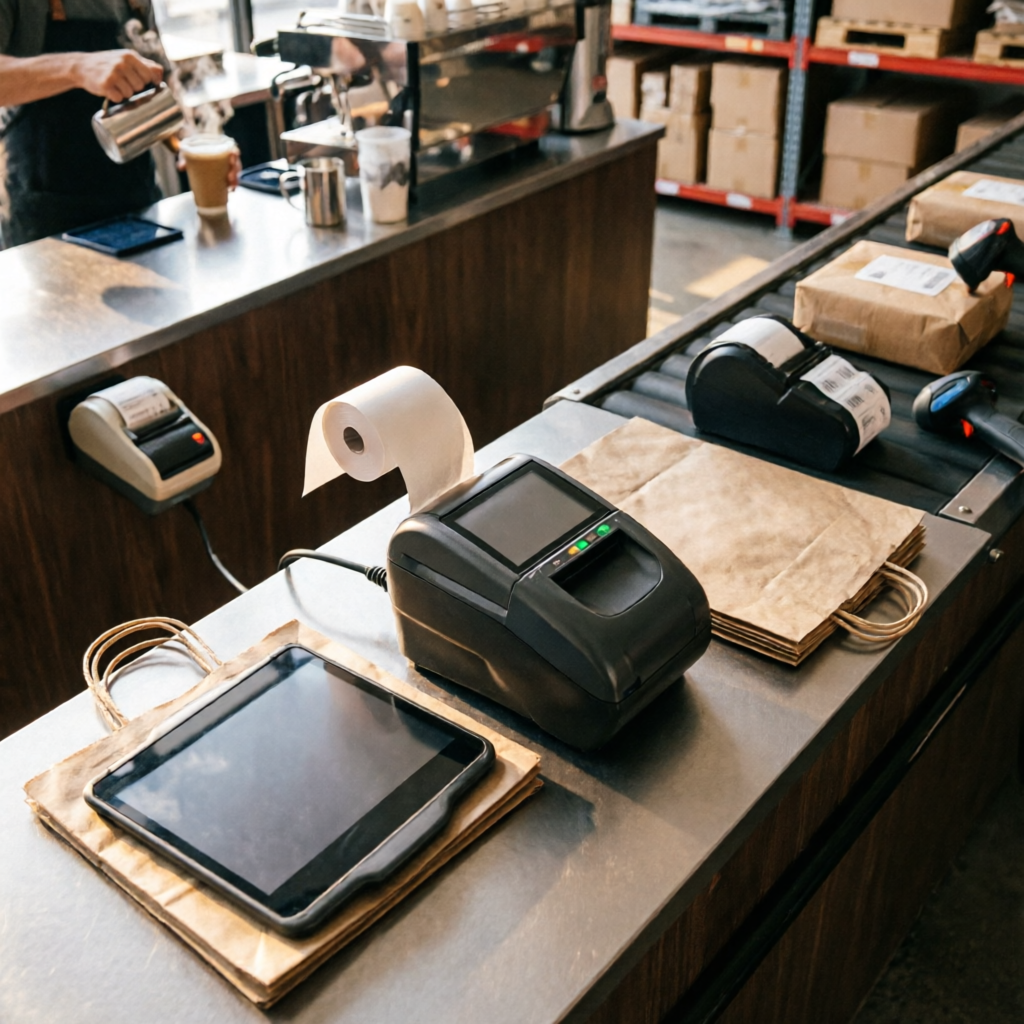
HSPOS has observed accelerating adoption of intelligent thermal printers across high-velocity verticals — from retail POS system upgrades in convenience stores to kiosk system deployments in transit hubs and thermal printer for warehouse barcode labeling automation. Market data confirms a compound annual growth rate (CAGR) of 4.2%, with the global thermal printing market projected to reach USD 49.84 billion by 2033 (Statista, 2025). What’s shifting is not just scale — but deployment logic: buyers now prioritize contextual fit over generic specs.
Vertical-First Innovation, Not Just Speed
Speed matters — but only when aligned with use case. A high-speed thermal printer 350 mm/sec delivers ROI in high-volume restaurant kitchens, while a low-noise thermal printer for café counter preserves customer experience without sacrificing reliability. Similarly, the dual-interface thermal receipt printer USB and Bluetooth enables seamless pairing with both legacy terminals and modern mPOS tablets — reducing integration friction in mixed-device environments.
Sustainability & Intelligence as Table Stakes
Eco-compliance is no longer optional: eco-friendly thermal printer recyclable paper support is now specified in RFPs across healthcare and premium retail. Meanwhile, AI-enabled thermal printer predictive maintenance moves beyond dashboards — HSPOS field engineers report 37% fewer unplanned service calls where this feature is enabled and calibrated to local ambient conditions (Q1 2025 deployment review).
From Peripheral to Integrated Node
The most consequential shift? Thermal printers are shedding their role as passive output devices. Models like the thermal printer with RFID integration for logistics generate synchronized label-and-tag events, feeding real-time visibility into WMS platforms. Likewise, cloud-connected thermal printer for small business users gain remote firmware updates, usage analytics, and automated consumables replenishment — turning hardware into a managed service layer.
Comments