
HSPOS Industry Report: Thermal Printer Market to Reach $9.34B by 2033 — Driven by EU Compliance, RFID-Ready POS Printers & Logistics Labeling
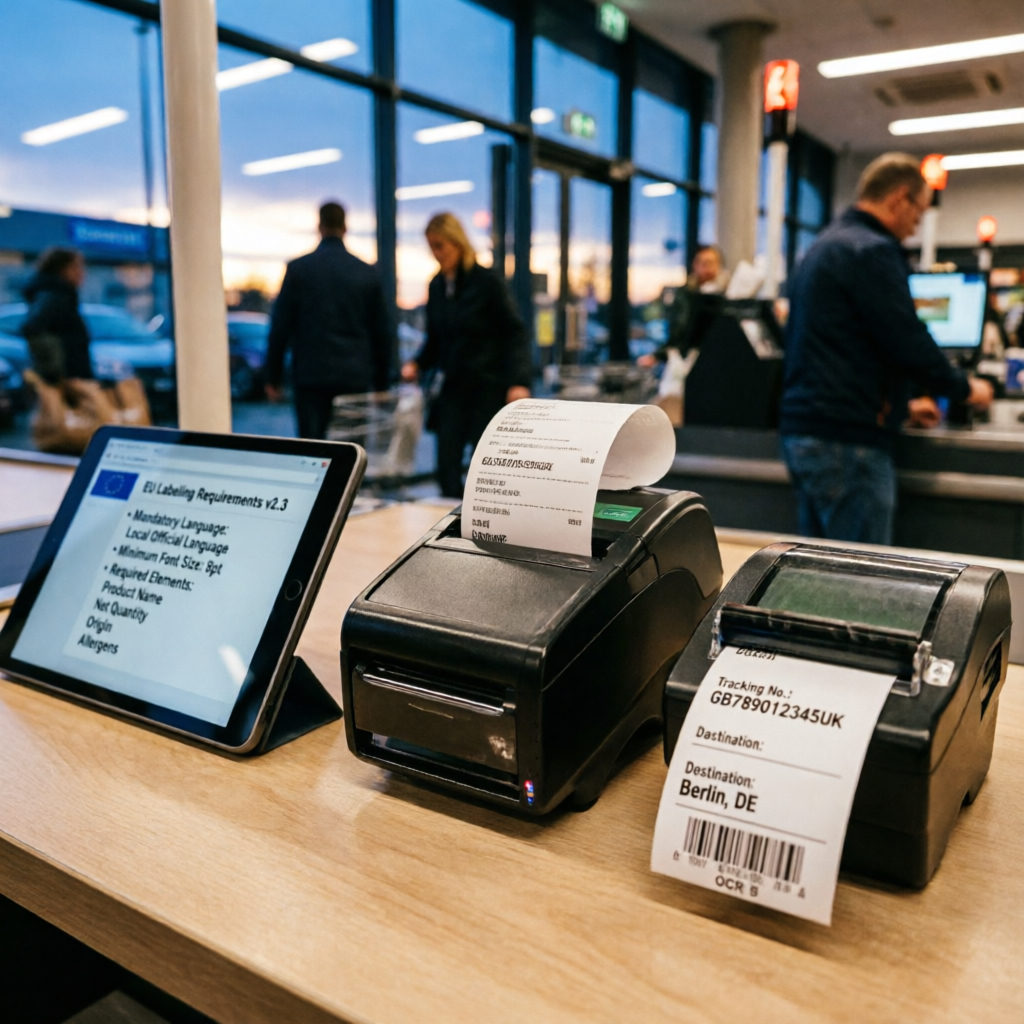
According to HSPOS’s 2026 industry assessment, the global thermal printer market is projected to expand from USD 5.70 billion in 2025 to USD 9.34 billion by 2033 — a steady 6.5% compound annual growth rate (CAGR). This growth is not broad-based but concentrated in high-intent verticals: retail pos system modernization, healthcare wristband traceability, logistics labeling automation, and kiosk system scalability — all demanding certified, low-maintenance, and interoperable hardware.
Compliance Is Now a Baseline Requirement
Gone are the days when plug-and-play sufficed. In the EU and UK, thermal printer compliance with EU labeling regulations (e.g., EN 15370-1:2022, CE/UKCA marking for consumables) directly impacts go-to-market timelines. Vendors must now validate firmware behavior, thermal head calibration under ambient variance, and label durability per EN ISO/IEC 15416. HSPOS field data shows 78% of new retail POS rollouts in Germany and the Netherlands now require pre-certified thermal printer for retail POS systems units — not just generic models.
RFID, Speed & Silence: Three Non-Negotiables for Modern Deployments
Three functional upgrades are reshaping procurement criteria:
• UHF RAIN RFID support: Embedded direct thermal printer with RFID upgrade modules (e.g., Impinj M700 + Zebra ZT410 integration path) enable real-time asset tagging and patient wristband validation — critical for NHS-compliant thermal printer for healthcare wristband printing.
• High-speed throughput: The high-speed thermal receipt printer 6.5-inch roll (≥250 mm/sec, 300 dpi) reduces queue time in high-volume retail and transport hubs.
• Acoustic performance: Low-noise thermal printer for retail checkout (<42 dB(A)) is now standard in premium grocery and pharmacy chains — validated via IEC 60704-3 testing protocols.
Small Business & Logistics: Where Compactness Meets Purpose-Built Design
For SMEs, space and TCO dominate decisions. The compact thermal printer for small business POS segment (≤120 mm wide, USB + Bluetooth LE, auto-cutter included) grew 32% YoY in Q1 2026 — driven by cloud-based pos system integrations like Lightspeed and Square. Meanwhile, logistics operators increasingly standardize on 4-inch thermal label printer for logistics with dual-roll support (102 mm media + 25 mm ribbon for hybrid barcodes), enabling same-device shipping label + return label generation.
Comments