
HSPOS Insights: Thermal Printer Trends 2026–2035 — Cloud-Managed, Dual-Station & Silent POS Printers Reshape Retail and Hospitality
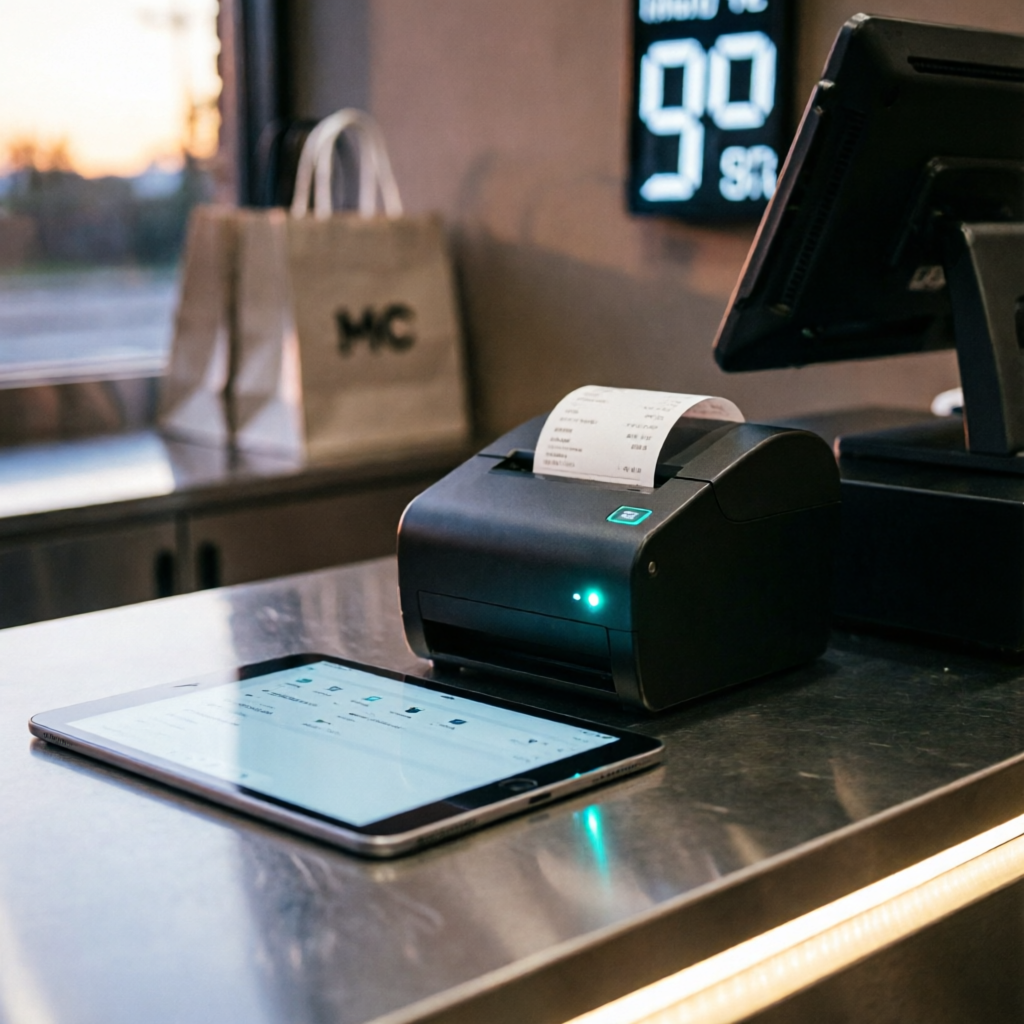
HSPOS analysis of 2026–2035 POS printer demand reveals a decisive shift: growth is no longer volume-driven, but use-case–driven. The global market is projected to expand at a 5.8% CAGR—not from more printers sold, but from more intelligent roles assigned to each unit. Key adoption vectors include POS label and receipt printer for omnichannel stores, compact kiosk printer for self-checkout retail, and mobile POS thermal printer compatible with iOS Android tablets.
Hospitality Prioritizes Reliability Over Raw Speed
While speed matters, operators in 餐饮行业 consistently rank silent operation, cloud firmware updates, and zero-touch deployment higher than peak print rate. This explains the rapid uptake of food service POS printer with silent operation and fast print speed—not as a spec sheet upgrade, but as an operational enabler for kitchen display systems (KDS) integrated with modern pos system platforms.
Two Deployment Models, One Integration Standard
The market bifurcation is real—but not by price alone. It reflects two distinct integration patterns:
• Infrastructure-tier: High-duty, single-purpose units like high-duty thermal receipt printer for supermarket self-checkout, built for 24/7 uptime.
• Solution-tier: Multi-function devices such as dual-station thermal printer for food delivery and counter POS, delivering simultaneous kitchen + front-counter outputs with unified driver management.
HSPOS Delivers Interoperability, Not Just Hardware
HSPOS focuses on eliminating integration friction for small and midsize businesses. Our small business POS printer with wireless and cloud connectivity ships pre-certified for leading kiosk system and 零售收银系统 stacks—including Square, Lightspeed, and本土主流SaaS平台—enabling deployment in under 15 minutes without CLI or SDK configuration.
Comments