
The Barcode Printer Market in 2026: Trends, Growth, and Future Directions
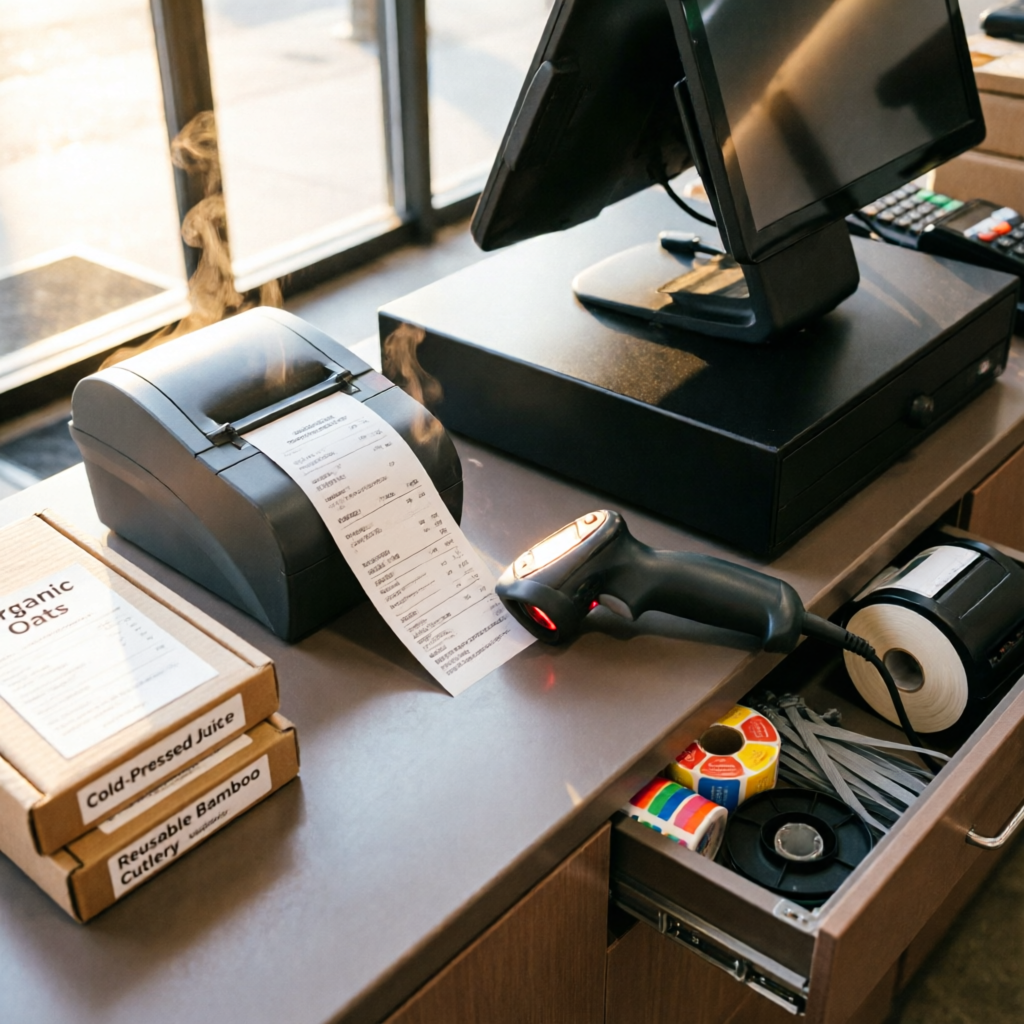
The global barcode printer market is entering a pivotal phase in 2026, driven by rising demand across retail, logistics, and healthcare. Direct thermal thermal printer adoption continues to accelerate—projected at a 6.4%+ CAGR—thanks to lower consumable costs and simplified maintenance, despite limitations in label longevity under heat or UV exposure.
Innovations like linerless labels and energy-efficient print engines are gaining traction among eco-conscious enterprises. Meanwhile, specialized applications are expanding the role of label printer solutions: inkjet and laser models now serve niche needs such as GHS-compliant hazard labeling and ultra-compact 2D codes on electronics packaging.
Integration is no longer optional. Modern buyers increasingly evaluate printers not just by speed or resolution, but by compatibility with broader ecosystems—including cloud-based pos system, ERP platforms, and self-service kiosk system deployments. HSPRINTER’s latest firmware updates emphasize seamless API connectivity and remote management capabilities.
Lifecycle support has become a decisive factor. Predictive diagnostics, certified recycling programs, and modular field-replaceable components directly impact TCO. As industry consolidation accelerates—evidenced by Xerox’s Lexmark acquisition and SATO’s BCS Group integration—the emphasis shifts from standalone hardware to end-to-end labeling and POS receipt workflows.
Comments