
HSPOS Thermal Receipt Printers: Wi-Fi, Ethernet & USB-C Options for Cloud POS, Kiosks & Restaurants
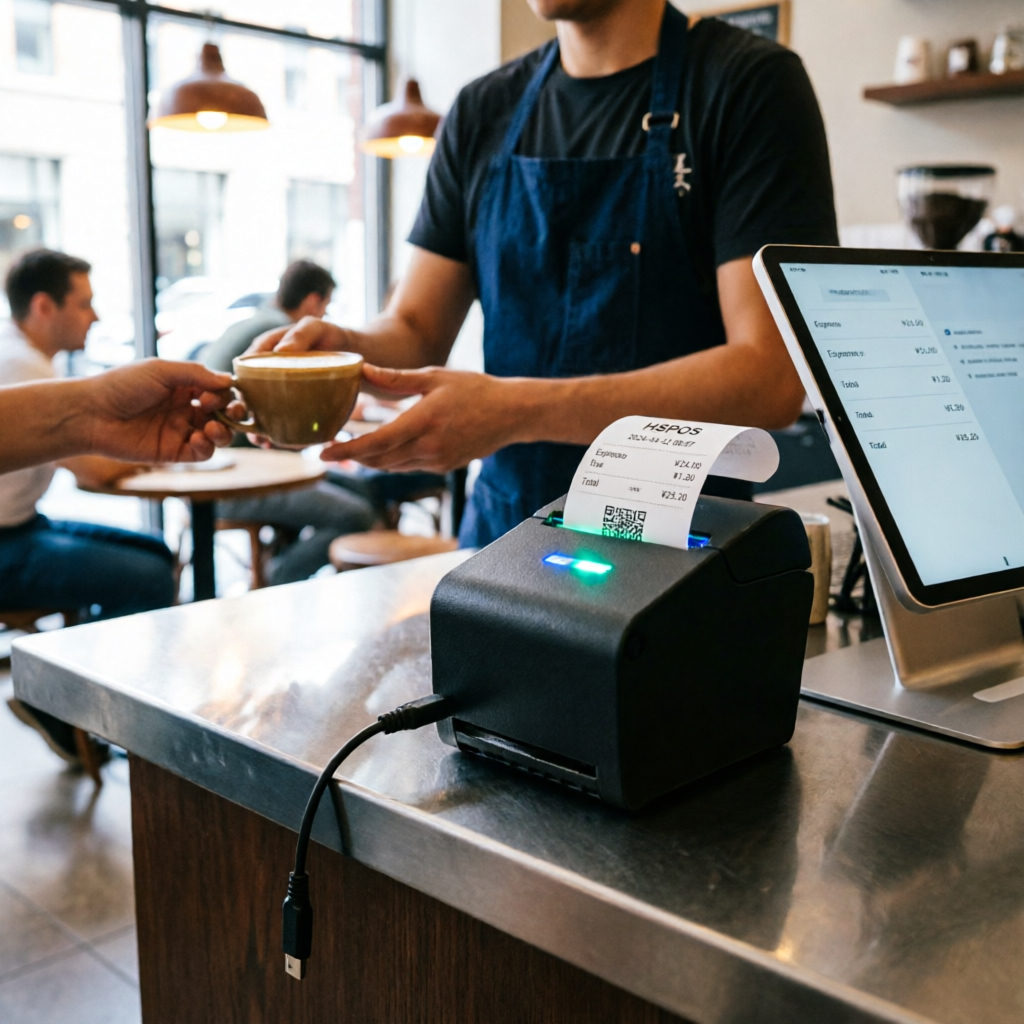
HSPOS thermal receipt printers are engineered for interoperability across modern thermal printer ecosystems — from legacy retail POS system integrations to cloud-native deployments. Unlike generic models, HSPOS devices undergo protocol validation with leading platforms including Square, Toast, Clover, and Android/iOS-based kiosks — ensuring reliable performance for kiosk system operators and 餐饮行业 teams alike.
Which Interface Fits Your Architecture?
Ethernet receipt printer for kiosk system: Ideal for fixed-location self-service terminals requiring deterministic latency and zero-touch reconnection after network resets. HSPOS E-series printers support IEEE 802.3af PoE (optional), reducing cabling to a single Cat6 run.
Wi-Fi thermal printer for restaurant POS: Optimized for 2.4 GHz/5 GHz dual-band roaming in high-interference kitchen environments. Includes WPA3 encryption and seamless AP failover — critical for order ticketing continuity during peak service.
USB-C thermal printer for cloud POS: Features HID-class driver compatibility out-of-the-box on Android 12+/iOS 17+, eliminating manual driver installs. Supports USB-C power delivery (up to 15W) for single-cable operation with mobile tablets and compact terminals.
Beyond Connectivity: Smart Features That Matter
HSPOS thermal receipt printers go further than interface support. Key differentiators include:
- Thermal receipt printer with remote management software: Monitor print status, firmware version, paper level, and thermal head temperature across fleets via HTTPS API or HSPOS Cloud Console.
- Thermal label and receipt printer dual function: Switch between 2-inch receipt and 4-inch label modes via ESC/POS command — no hardware swap needed.
- High-speed 3-inch thermal printer for food delivery POS: 200 mm/sec max speed + auto-cutter rated for 1.5M cuts, validated under continuous 8-hour shift testing in partner kitchens.
For small retailers, the compact thermal printer for small business retail integrates all three interfaces (Wi-Fi/Ethernet/USB-C) in a 108 × 142 × 120 mm chassis — certified for EN55032 Class B EMC compliance in shared retail spaces.
Final note: All HSPOS models ship with pre-loaded ESC/POS command sets for major cloud POS vendors and include publicly documented Android/iOS compatibility matrices, not just marketing claims.
Comments