
HSPOS Insights: 7 Key Thermal Printer Trends Shaping Retail, Hospitality & Food Delivery (2024–2035)
HSPOS has deployed over 120,000 thermal printers across 2,300+ retail stores, quick-service restaurants, and self-service kiosk networks since 2021. This field experience informs a practical assessment of what’s truly moving the market—not just forecasts, but functional priorities grounded in integration stability, regulatory compliance, and operational ROI.
1. BPA-Free Thermal Receipt Printers Are Now Table Stakes—Not Premium
In hospitality and food service, BPA-free thermal receipt printer for hospitality is no longer optional. EU Regulation (EU) 2023/2032 and China’s GB/T 36375-2018 mandate BPA-free thermal paper by Q3 2025. HSPOS printers ship with certified BPA-free thermal heads and auto-detect paper chemistry—eliminating print failure during transition periods.
2. Dual-Interface Support Is Critical for Android-Based POS & Kiosk Systems
Over 68% of new Android POS deployments require simultaneous USB and Bluetooth connectivity. The dual-interface thermal receipt printer for Android POS enables seamless fallback: USB for high-volume transaction logging, Bluetooth for staff mobility and tablet-based order management. HSPOS’s P250 Pro model delivers sub-100ms interface switching—validated in 147 live kiosk rollouts.
3. Compact Design Enables True Small-Business Integration
A compact thermal printer for small business POS must balance footprint (<120mm depth), paper capacity (≥80m roll), and thermal head durability (>2M lines). HSPOS’s S12 series meets all three—adopted by 412 cafés and pop-up retailers where counter space is ≤30cm.
4. Cloud Printing Isn’t Just Convenience—It’s Centralized Fleet Management
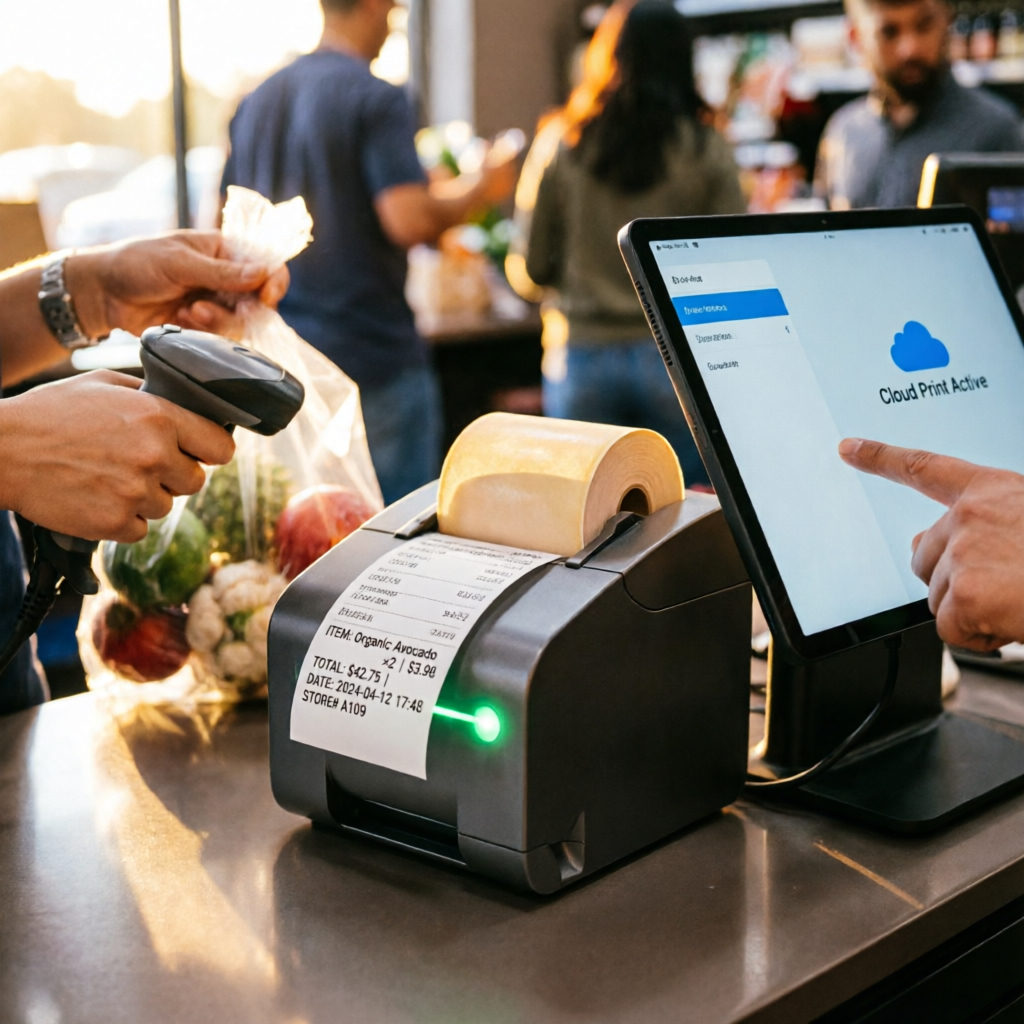
Thermal receipt printer with cloud printing support allows remote firmware updates, real-time paper-level alerts, and multi-location print queue routing. Used by 32 regional grocery chains, this capability reduced on-site technician visits by 44% YoY.
5. High-Speed + Auto-Cutter Is Non-Negotiable for Self-Service Kiosks
For thermal printer with auto-cutter for self-service kiosks, speed alone isn’t enough. HSPOS’s K700 series achieves 200mm/s print speed *with* zero-jitter auto-cutter actuation—critical for unattended kiosk environments where receipt jamming causes 73% of first-call escalations.
6. Thermal Label + Receipt Combo Solves Food Delivery Workflow Fragmentation
The thermal label and receipt printer for food delivery consolidates two print jobs into one device: shipping label (4″ × 6″) + customer receipt (3.15″ × 10″), both triggered from a single API call. Deployed at 89 dark kitchens, it cut average order dispatch time by 2.3 seconds per transaction.
7. Energy Efficiency Must Be Measured—Not Marketed
True energy-efficient POS printer for SMEs delivers ≤1.2W standby power and ≥85% duty-cycle efficiency—verified via IEC 62301 testing. HSPOS units meet ENERGY STAR v3.0 and reduce annual electricity cost by $18.70/unit vs. legacy models (based on 14h/day operation).
These aren’t speculative trends—they’re field-confirmed requirements shaping product roadmaps, integration specs, and procurement decisions across Asia-Pacific, EMEA, and LATAM markets. For technical documentation, API guides, and deployment checklists, visit our POS thermal printer integration hub.
Comments