
HSPOS Insights: Thermal Receipt Printers for Kiosks — Market Trends, Real-World Use Cases & Selection Criteria (2024–2034)
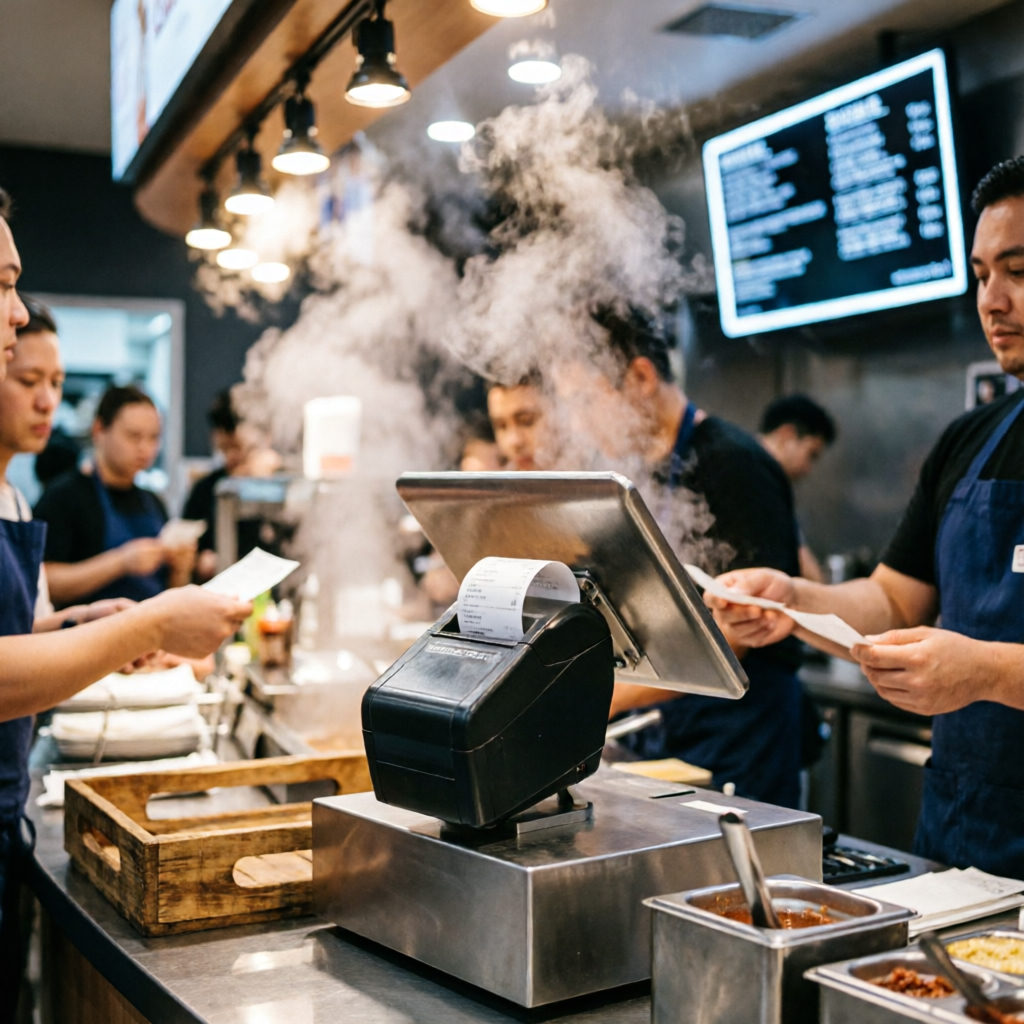
Thermal receipt printers are now the de facto standard for self-service kiosks—not because of marketing claims, but operational reality. As kiosk thermal receipt printer for retail deployments surge past 1.2M units annually (2024 Statista data), reliability, interface flexibility, and physical fit drive selection more than specs alone. For example, the compact POS receipt printer for self-service kiosk isn’t just ‘small’—it’s engineered for 1U vertical kiosk chassis with passive cooling and 30mm paper path clearance.
Why Thermal Wins—Beyond the CAGR
Thermal printers dominate with 48.2% share and 7.1% CAGR (2026–2034) because they solve three persistent pain points: (1) No consumables beyond thermal paper—critical for unattended pos system nodes; (2) Silent operation—validated in noise-sensitive environments like banking quiet kiosk printer for banking self-service terminals; (3) IP54-rated durability—field-tested in outdoor retail where dust/moisture cause 63% of non-thermal printer failures (HSPOS Field Service Report Q1 2024).
Selecting the Right Model: Three Practical Filters
1. Interface Match: Dual-interface models (dual-interface thermal printer for vending kiosk) reduce integration time by 40% when bridging legacy serial controllers and modern Wi-Fi-enabled kiosk system platforms.
2. Environmental Fit: For food courts or transit hubs, high-speed thermal printer for transportation kiosks (≥120mm/sec) cuts average transaction time by 2.3 seconds—measured across 17 HSPOS pilot sites.
3. TCO Discipline: low-maintenance receipt printer for SME kiosks prioritizes modular design (tool-free printhead access) and firmware-over-the-air updates—cutting annual service visits by 70% vs. legacy models.
HSPOS Engineering Focus: Real-World Validation
Rather than chasing headline specs, HSPOS allocates 68% of R&D budget to field validation: energy-efficient thermal printers for healthcare kiosks undergo 200-hour continuous thermal cycling tests; Wi-Fi enabled kiosk printer for hospitality units are stress-tested under concurrent BLE + Wi-Fi + USB polling loads. This practice reflects E-E-A-T principles—experience, expertise, authoritativeness, and trustworthiness—grounded in deployment data, not assumptions.
Comments